Vermont races past 20,000 EVs on the road as driving electric costs around $1.75/gallon
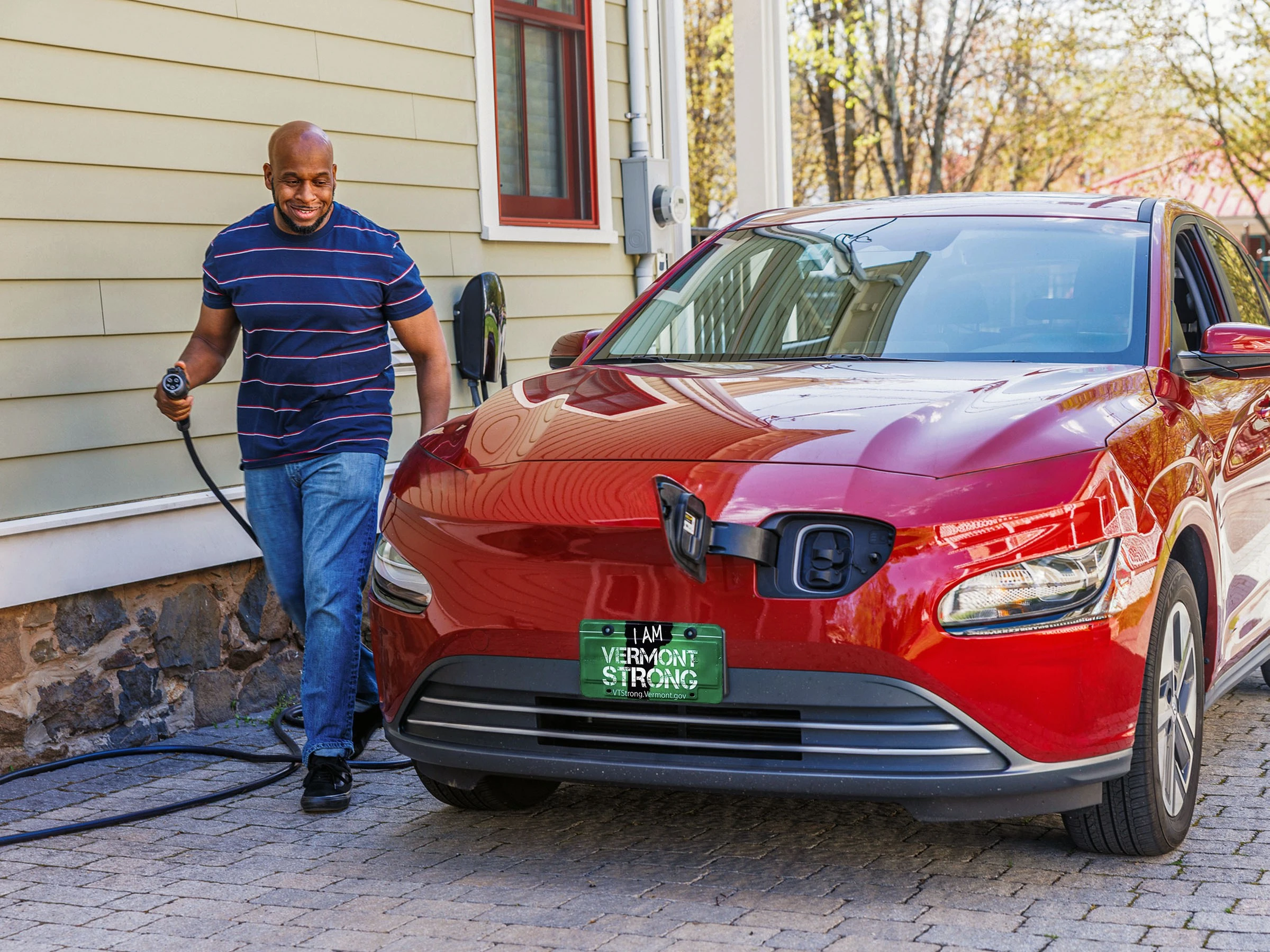
Rising gas prices, affordable used EVs, and lower home charging rates spur EV interest across Vermont
WINOOSKI, VT — Vermont now has nearly 21,000 electric vehicles on the road, a 12% increase over the last year, according to new data from Drive Electric Vermont. As high gas prices steer drivers toward more affordable alternatives, the growing number of used EVs on the market—plus utility incentives and discounted charging rates—make driving electric an increasingly cost-effective option for Vermont drivers.
For most Vermonters, driving an EV is like paying $1.75/gallon—closer to $1/gallon when using discounted home charging rates or bill credits offered by many Vermont utilities. Driving a gas-powered car can cost 150% more per mile as average Vermont gas prices remain around $4.50/gallon.
A driver charging an EV at home on a reduced off-peak charging rate would have saved about $5,300 in fuel costs over the past five years compared to driving a gas-fueled car. Now, more affordable used EVs on the market make switching to an electric vehicle more accessible for Vermonters watching their budget.
“More EVs are coming off lease and into the used market, giving Vermonters affordable options when it comes to used electric cars and trucks,” said David Roberts, the Drive Electric Vermont Coordinator. “With less maintenance and lower costs per mile compared to driving a gas car, and the convenience and low cost of charging at home, Vermonters can see real savings every time they drive.”
Notable trends in Vermont’s EV market:
- Vermont has 20,970 electric vehicles on the road—a 12% increase over the last 12 months
- It took a decade for Vermont to register its first 10,000 EVs—and less than three years to register the next 10,000
- As of April 2026, pre-owned EVs made up 45% of Vermont’s newly registered electric vehicles, the highest proportion of used EVs ever
- One in every ten new vehicles registered in Vermont in 2025 had a plug, according to the 2025 Vermont Vehicle Index
- 62% of Vermont’s EVs are all-electric vehicles (AEVs) powered entirely by a battery, while 38% are plug-in hybrid electric vehicles (PHEVs) that run on a battery or a gas-powered engine
- More than 250 other electric vehicles are on Vermont’s roads, including 71 e-transit and electric trucks, more than 40 electric school or transit buses, and 80 electric motorcycles and mopeds
Vermont electric utilities are helping drive EV adoption with significant incentives and reduced rates. Many utilities have rebates for buying EVs. Utilities with incentives for home charging include:
- Burlington Electric Department: Customers can get a rebate for up to $900 toward a home EV charger, plus special reduced rates for EV charging. BED offers additional incentives for income-qualified customers and chargers for multi-family properties. Visit BED to learn more.
- Green Mountain Power: Customers can get a free Level 2 home charger to use when they join GMP’s Home Charging Program, which offers discounted charging rates. Plus, customers can get up to $650 in installation incentives when they install the charger. Go to GMP to learn more.
- Stowe Electric Department: Incentives for home EV charging are available through the Connected Homes program. Customers can get a $100 rebate for purchasing a compatible WiFi-enabled Level 2 home charger and receive a $10/month participation incentive. Additional incentives are available for income-qualified customers. Learn more about Connected Homes.
- Vermont Electric Co-op:Customers can get a free Level 2 home charger that they can enroll in VEC’s managed charging program (or a $250 bill credit if they bring their own charger). Customers who do not have a compatible charger can enroll eligible EVs directly for a $100 enrollment incentive. All customers enrolled in VEC’s program will also get an $8/month bill credit to avoid charging at times of high electricity demand. See VEC’s home charging incentives for more.
- Washington Electric Co-op: Customers can get a free Level 2 home EV charger for enrolling in the PowerShift program, plus a $500 Efficiency Vermont rebate for charger installation costs. Customers who already have an EV charger can get a $100 incentive for enrolling in the program. All customers enrolled in PowerShift also get a $10 monthly bill credit. Visit WEC’s site for more.
“When co-op members plug in their EVs using the PowerShift program, everyone saves,” said JJ Vandette, Director of Special Projects & Innovation for Washington Electric Cooperative. “Nearly half of our EV drivers have joined PowerShift already, turning their daily charge into monthly bill credits. By doing so, these members are actively shrinking power costs for our entire co-op community.”
EV drivers can also still take advantage of federal tax credits for home EV chargers—but they’ll have to act fast. June 2026 is the last month of eligibility. Tax credits covering 30% of the costs of installing a home EV charger (up to $1,000) remain available this year, but home EV chargers must be placed in service by June 30, 2026, to be eligible.
Vermont’s network of public chargers is also growing to keep pace with EV adoption:
- There are now 537 public EV chargers—a 16% increase in public chargers over the last 12 months
- Vermont now has 100 Level 3 DC Fast Chargers (DCFC), which can quickly charge most EVs in 20-45 minutes
- Combined, public chargers offer 1,371 charging ports (individual plugs that can charge an EV)
Driving electric isn’t only more affordable than a gas vehicle—it’s a key opportunity to reduce Vermont’s greenhouse gas (GHG) emissions and protect the environment. According to the Vermont Energy Action Network, most EVs generate about 30% of the lifetime GHG emissions of gas-powered cars. With Vermont’s low-carbon electricity supply, that number is even lower—an all-electric EV in Vermont generates just 14% of the lifetime GHG emissions as a comparable gas car.
About Drive Electric Vermont
Drive Electric Vermont is a statewide public-private partnership of policymakers, industry leaders, and citizens accelerating transportation electrification in the Green Mountain State. Our work is coordinated by clean energy nonprofit VEIC and includes EV education and outreach, charging infrastructure development, EV incentive program support, and stakeholder coordination.