Tesla’s fast charging network is opening up. Here’s what it means for you.
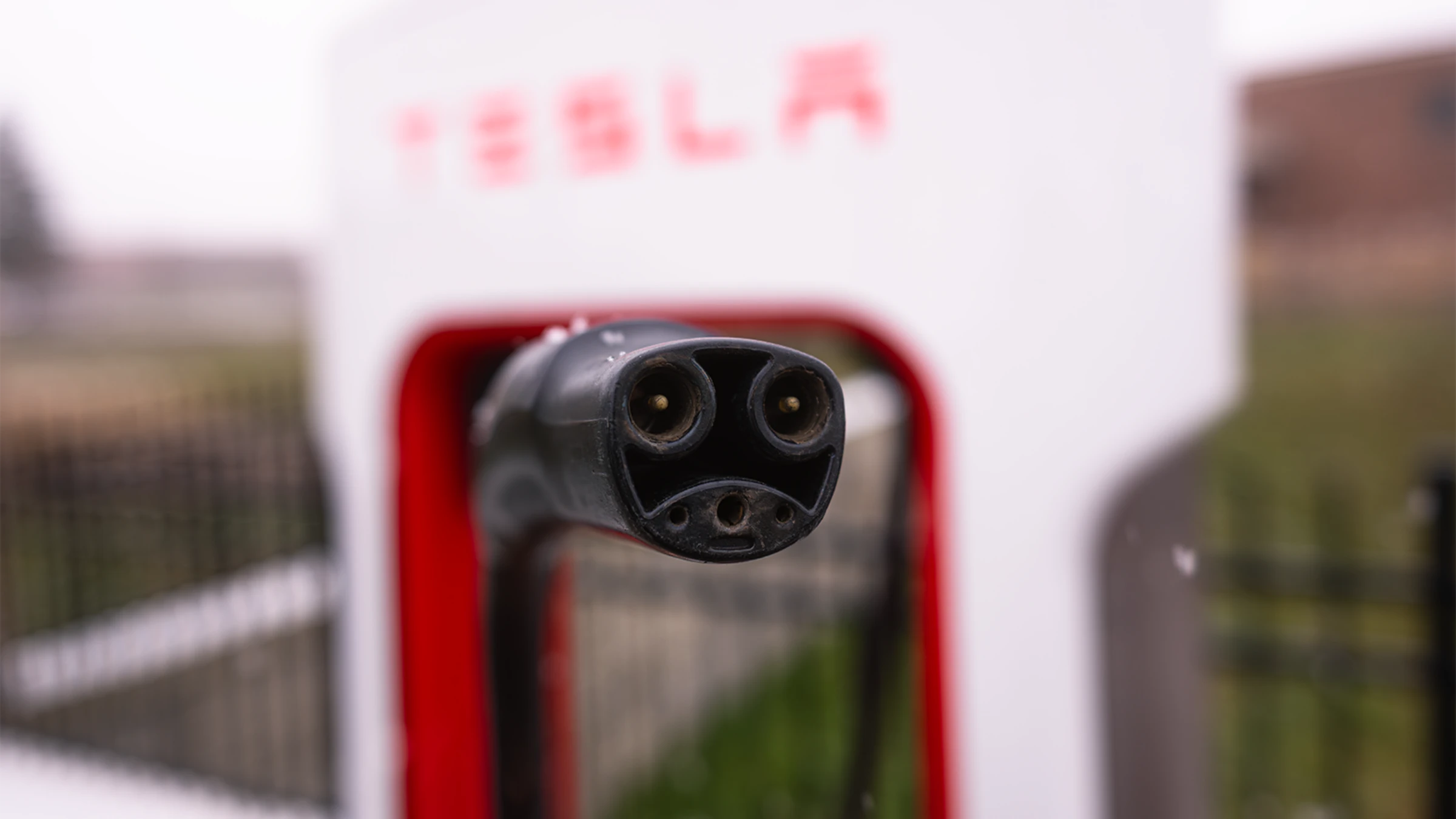
The Tesla Supercharging network has long been the gold standard for DC fast charging in the United States. Charging stations are conveniently located, reliable, and quick. Until recently, only Teslas were able to use the Supercharging network. One reason for the exclusivity was that Teslas used a different type of plug (NACS) than other EVs (CCS and CHAdeMO).
But that's changing. In 2025, the Tesla Supercharging network has opened up to a wider range of EV manufacturers. Drivers of, say, a Chevrolet Bolt can use a Supercharger if they have a CCS-to-NACS adapter and use the Tesla app for payment.
Moving forward, automakers have agreed to manufacture new vehicles with the same NACS charging ports as Tesla, meaning those cars will plug right into a Supercharger or other NACS charging equipment without an adapter. This will make the EV charging experience simpler and more streamlined for EV owners in the coming years.
Other charging providers, like ChargePoint, Electrify America, and EVgo, have plans to add the NACS plug to their charging stations as well.
This transition is good news because it drastically expands reliable charging opportunities for non-Tesla owners. The NACS plug is also slimmer, lighter, and easier to handle, which is a welcome change from bulky CCS chargers.
Here's what you can expect over the next few years:
-
Automakers begin offering NACS adapters for existing vehicles
You can think of this phase as a "bridge period" between the old hardware and the new hardware.
Right now, most EVs are still manufactured with a CCS charging port. Charging networks like Flo and ChargePoint support the CCS plug, but most of the Tesla Supercharging network does not. (There are some Superchargers with built-in “magic dock” CCS adapters that are open to non-Tesla EVs.)
To allow existing EVs to use Superchargers, auto manufacturers are working with Tesla to offer CCS-to-NACS adapters and ensure compatibility of their vehicles with Supercharger equipment. Tesla keeps a current listing of CCS-equipped vehicles able to access Tesla Superchargers.
Even if you have an adapter and your vehicle is on the list of compatible vehicles, there are some Tesla Superchargers that are only open to Tesla drivers. This is generally due to NACS incompatibilities with older equipment.
To find Superchargers that are open to non-Teslas, check out:
- The Tesla charging map can be filtered to show locations open to non-Tesla vehicles.
- The Tesla app can be configured for your vehicle to identify potential charging locations.
- Resources like PlugShare can filter out incompatible locations by “Hiding Tesla Only Locations” in their filters. -
Automakers begin manufacturing new vehicles with NACS ports
Most EV automakers are starting to transition to the NACS port on new vehicles. Several Hyundai and Kia models now ship with NACS ports, and many more models are expected to make the shift in the next few years. According to Recurrent, automakers need to tweak their engineering and design to make the NACS ports work. These new vehicles don't need an adapter to charge at the Tesla Supercharger network--they just plug in and start charging as long as the location is open to non-Tesla vehicles.
Most of these native NACS vehicles should have adapters available so they can continue to access non-Tesla fast charging stations with CCS plug equipment.
-
Other charging networks begin offering NACS plugs
As EV charging infrastructure expands across the U.S., and automakers converge on a universal port, you can expect to see more NACS plugs offered at non-Tesla charging networks.
Here are the automakers with vehicles that can currently plug into Tesla Superchargers with an adapter:
- Acura
- BMW (may require vehicle software update)
- Audi
- Ford
- Genesis
- GM (Chevrolet, Cadillac, GMC)
- Honda
- Hyundai
- Jaguar
- Kia
- Lexus
- Lucid
- Mercedes-Benz
- Nissan
- Polestar
- Porsche
- Rivian
- Subaru
- Toyota
- Volkswagen
- Volvo
Contact our team if you have additional questions on this transition!