How Vermont’s clean transportation incentives drove real change
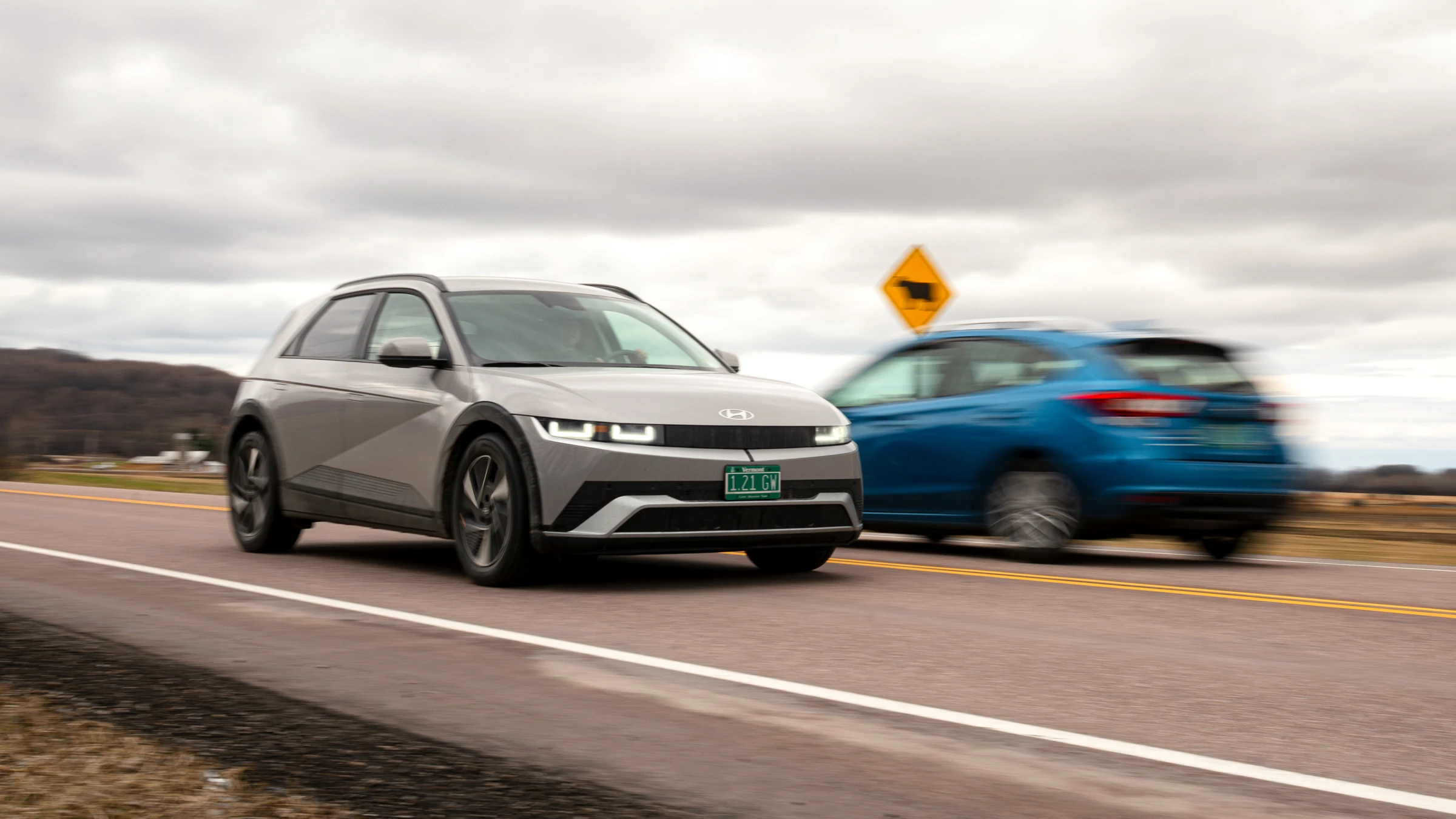
Vermont has more EVs on the road than ever before. There are a few reasons:
- There are more EV models available at lower price points.
- EV charging infrastructure continues to expand.
- Used EV availability continues to grow.
- State and federal incentives have helped make EVs more affordable for Vermonters.
Between 2019 and 2025, the Vermont Agency of Transportation (VTrans) sponsored five clean transportation incentive programs. In total, the state disbursed over $23.5 million through almost 7,000 incentives.
These programs helped Vermont earn the #1 spot on the National Resources Defense Council’s State Transportation Scorecard. The superlative is notable because it emphasizes a holistic, people-first approach to transportation electrification. Vermont focused on making EVs more accessible to a broader range of people, including low-income Vermonters and renters. At the same time, the state has invested in the charging infrastructure to make EVs more practical for our rural state.
“The program outcomes speak to the success of the state’s efforts to make electric vehicle ownership a possibility for a broader range of Vermonters,” said Transportation Secretary Joe Flynn. “With more EV drivers on the roads every day, we continue building an accessible and reliable fast-charging network for all Vermonters and for visitors to the state.”
Here’s a quick rundown of the five programs and what they accomplished.
For more information, see the VTrans resource on Clean Transportation Incentive Programs, including an interactive reporting dashboard.
Vermont EV Incentive Programs
-
This incentive program provided up to $5,000 for the purchase or lease of new all-electric and plug-in hybrid vehicles.
At a glance- 4,603 incentives issued (Incentive amounts were higher for lower-income purchasers and for all-electric models)
- 70% of funding went to lower-income Vermonters
- 82% of funding supported all-electric vehicles
- Average incentive was $3,345, averaging 8% of the vehicle price
- Most popular vehicles included the Chevrolet Bolt, Nissan Leaf, Volkswagen ID 4, and the Toyota RAV4 Prime
- See more details
- State of Vermont Clean Transportation Incentive Programs
-
The MileageSmart program (administered by Capstone Community Action) provided up to $5,000 for pre-owned all-electric, plug-in hybrid, and conventional hybrid vehicles for income-eligible purchasers.
At a glance- 1,277 low-income Vermonters served
- Average incentive was $4,500
- 448 all-electric vehicles
- 284 plug-in hybrid vehicles
- 545 conventional hybrid vehicles
- See more details
- State of Vermont Clean Transportation Incentive Programs
-
The Replace Your Ride Incentive Program provided up to $5,000 to scrap an old gas-powered vehicle and replace it with a new or used EV or a clean transportation debit card.
At a glance- 451 Vermonters served
- Average incentive was $4,467
- Average scrapped vehicle age: 15.5 years old
- Average scrapped vehicle odometer: 159,000 miles
- See more details
- State of Vermont Clean Transportation Incentive Programs
-
The eBike program offered $400 toward a standard eBike, $800 toward a cargo eBike, or $800 toward an adaptive eBike.
At a glance- 606 Vermonters served
- Average incentive was $453
- 14 adaptive eBikes purchased
- See more details
- State of Vermont Clean Transportation Incentive Programs
-
The Electrify Your Fleet program helped Vermont business, nonprofit, and municipal fleets transition to electric vehicles.
- 10 businesses participated, including a farm and a childcare center
- 3 municipal organizations participated
- 6 nonprofits participated, including 2 shared mobility service providers
- 37 all-electric vehicles purchased
- 7 plug-in hybrid electric vehicles purchased
- 3 electric bicycles purchased
- 3 electric utility vehicles purchased
- 1 electric snowmobile purchased
- See more details
- State of Vermont Clean Transportation Incentive Programs
What’s happening now
The State of Vermont's EV incentive programs may have ended, but the Green Mountain State is still committed to the EV transition. Here are a few EV updates for anyone considering a switch:
- No additional funds were appropriated during the 2025 Vermont legislative session, so state-funded EV incentives will not return for the foreseeable future.
- Most Vermont utilities continue offering incentives for EVs and charging infrastructure. Check out our Incentives page to see how much money you could get.
- Vermont’s new and used car dealers continue to stock and sell over 70 different EV models.
- The Charge Vermont program is funding more workplace and multi-family charging across the state.
- VTrans is building out more EV fast charging along designated corridors through the National Electric Vehicle Infrastructure (NEVI) program.
- Our Drive Electric Vermont support resources are available to consumers, businesses, and municipalities who might need a little help before making the switch to an EV or installing charging.
Want to stay informed?
Subscribe to the Drive Electric Vermont newsletter using the form below to stay up to date on EV news in Vermont. You can also follow us on Instagram.